Database disaster recovery software has an unusual job. It spends much of its life operating quietly behind the scenes, while its value becomes visible only when something goes wrong.
For the people responsible for it, confidence in it has to build long before that moment.
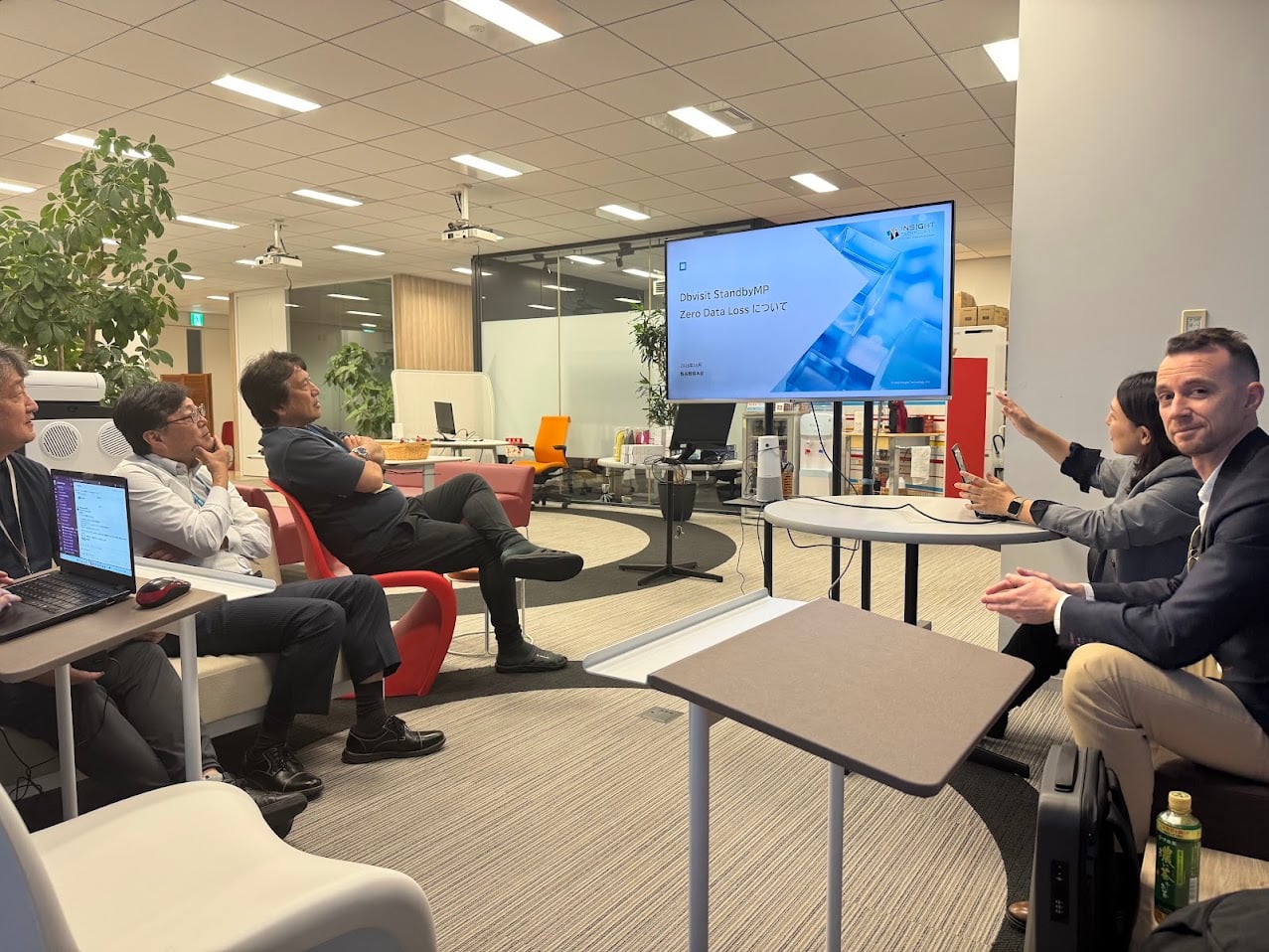
During a recent visit to Japan by our Head of Development and me, conversations with our distributor and partners brought this discussion of reliability and confidence into focus. We were discussing the Zero Data Loss option for Dbvisit StandbyMP, but the discussion revealed something broader about how customers experience dependable software.
Dbvisit StandbyMP is built on the concept of reliability and stability, it’s a non-negotiable for us during product development and testing. Our customers want straightforward deployment, reliable background operation and clear confirmation that their database protection is working.
For them, having the software be as low-touch as possible is an important benefit.
Regular heartbeat notifications help make that experience possible. They give customers a way to stay informed without opening the user interface every day. Alongside status alerts and log-gap reporting, they give clarity to operations that would otherwise remain unseen, and confidence that everything is operating as expected.
Over time, that visibility and stability can build confidence. Customers know where to look for reassurance and when something needs attention. Our conversations in Japan explored what happens when a new capability introduces a new decision for the operator.
StandbyMP’s optional, separately licensed Zero Data Loss feature adds asynchronous redo streaming alongside archive-log shipping for supported Oracle Standard Edition environments. It is designed to achieve sub-second recovery point objectives (RPO) in suitable environments. See how ZDL works.
The two replication methods have complementary roles, and archive-log shipping remains in place when ZDL is enabled. Under rare network conditions, ZDL streaming can stop to prioritise archive-log synchronisation. Following an interruption that shuts streaming down, the documented behaviour requires ZDL to be manually enabled again. See the ZDL requirements.
The feedback from our partners was that this behaviour was correct for customers familiar with StandbyMP, but may cause confusion for the large group of customers who only ever see the heartbeat notifications. A specialist may want to investigate the network and choose when to restart. A customer relying on managed database services may need their provider to make that decision. A generalist IT team may be uncertain about the notification’s meaning and raise a support request.
Each needs accurate information and an appropriate path forward. And so it was decided then and there that we’ll introduce a small UX improvement next quarter. For us, this highlighted four things that belong together in a dependable product experience: stability, appropriate automation, clear communication and simple controls.
Reliability and stability must be the foundation.
The software must be stable over years without intervention, and the software should be resilient to environment changes.
- Automation should reduce avoidable intervention where the software can act safely.
- Communication should explain what changed, what protection remains and whether action is required.
- Control should allow the responsible operator to investigate and make informed decisions.
These conversations also reinforced the importance of designing for the service relationship around the software. The customer receiving reassurance and the person responsible for resolving an issue are often different people.
The message I brought home was simple: To our customers and partners, StandbyMP’s biggest strength is not the point-in-time restore feature, or zero data loss switchovers (all great features!), but rather that it can reliably operate for years without intervention, while providing customers and partners clarity that their critical databases are protected.
Reliable operation, clear monitoring and thoughtful recovery behaviour all contribute to this. Together, they help customers spend less time managing their database protection and more time being confident in it.


 Back to Blog